
How to Get Acrylic Paint Out of Carpet: Proven Methods
Accidentally spilling acrylic paint on your carpet can be a frustrating experience, but it doesn’t have to be permanent. Did you know that acting quickly can significantly increase your chances of successful paint removal? With over 15 years of experience in home cleaning solutions, I understand the urgency of tackling paint stains effectively. In this article, you will learn proven methods for how to get acrylic paint out of carpet, from immediate response techniques to deep cleaning strategies. Whether you’re dealing with a fresh spill or an older stain, our comprehensive guide will help you restore your carpet to its original condition.
Understanding Acrylic Paint and Its Properties
Acrylic paint is a water-based medium that becomes water-resistant once dry. Its quick-drying nature can pose challenges when spilled on carpet. Understanding this characteristic is crucial for effective removal. The longer acrylic paint sits on carpet fibers, the more difficult it becomes to remove. Therefore, acting quickly increases your chances of success. Additionally, acrylic paint can bond with the carpet fibers, making it essential to use appropriate techniques and materials for removal to avoid damage.
Why Acrylic Paint Stains Carpet
Acrylic paint is made from pigments suspended in acrylic polymer emulsion, which can adhere strongly to surfaces, including carpet fibers. Once dry, it forms a durable film that resists water and solvents. This adhesion is what makes acrylic paint a popular choice for artists, but it also complicates cleanup when spills occur. Understanding the chemical composition helps in selecting the right solvents or methods for removal.
Assessing the Carpet Material
Carpet materials vary widely—from synthetic fibers like nylon and polyester to natural fibers such as wool. Each material responds differently to cleaning methods. For instance, synthetic fibers may withstand harsher cleaners, while natural fibers might require gentler treatments to avoid damage. Identifying your carpet’s material before attempting stain removal can help tailor your approach effectively.
Key Points:
- Acrylic paint dries quickly, making prompt action essential.
- Carpet material affects the choice of cleaning method.
Initial Steps for Acrylic Paint Removal
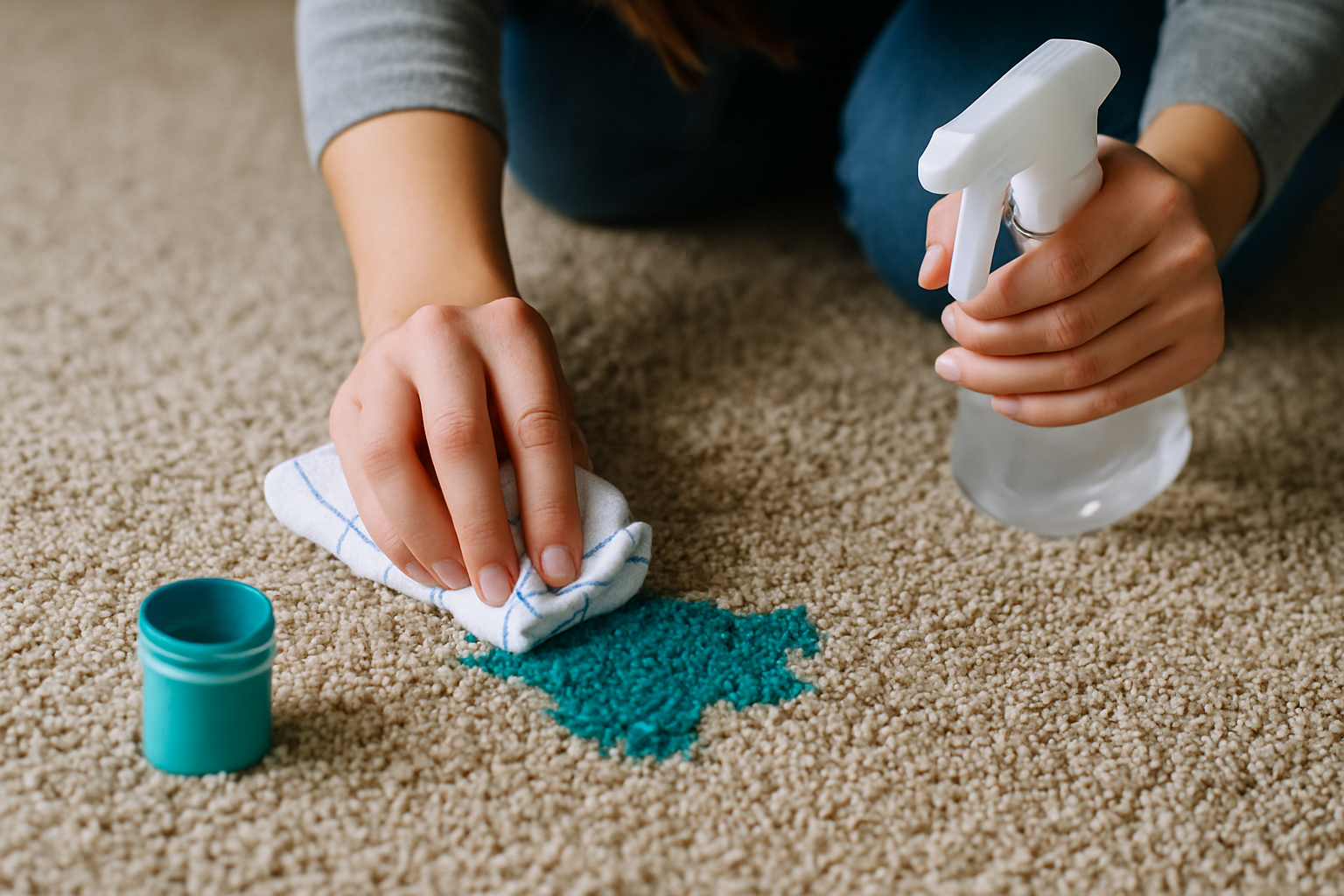
When faced with an acrylic paint spill, immediate action is vital. Start by gently blotting the stain with a clean cloth to absorb excess paint. Avoid rubbing, as this can spread the paint further and push it deeper into the fibers. After blotting, assess the stain’s size and severity to determine the best removal technique. Using a methodical approach increases the likelihood of completely removing the stain without damaging the carpet.
Blotting the Stain
Using a white cloth or paper towel, gently blot the stain to absorb as much paint as possible. Start from the outside of the stain and work your way inward to prevent spreading. Blotting is crucial because it removes excess paint without driving it further into the carpet fibers. Repeat this process until no more paint transfers to the cloth.
Testing Cleaning Solutions
Before applying any cleaning solution, test it on an inconspicuous area of the carpet. This step is important to ensure that the solution does not discolor or damage the fibers. Apply a small amount of the solution and blot with a cloth. If there is no adverse reaction, you can proceed with treating the stain more confidently.
Key Points:
- Blotting helps prevent the spread of the stain.
- Always test cleaning solutions on a hidden area first.
Immediate Response to Acrylic Paint Spills
When faced with an acrylic paint spill on carpet, immediate action is crucial to prevent permanent staining. First, act quickly to blot the area with a clean cloth or paper towel to absorb excess paint. Avoid rubbing, as this can push the paint deeper into the fibers. Once most paint is blotted, use a mixture of warm water and mild detergent for cleaning. Dampen a cloth with this solution and gently dab the stain, starting from the outer edges and working inward to prevent spreading. Rinse with clean water and blot dry afterward.
Blotting Technique
Blotting is the most effective initial response to spills. Use a clean cloth, starting from the outer edges of the stain. This method prevents the paint from spreading and reduces the amount absorbed into the carpet fibers. Always use a light touch to avoid damaging the carpet.
Cleaning Solution Preparation
A simple cleaning solution can effectively break down acrylic paint. Mix one tablespoon of mild dish soap with two cups of warm water. This solution helps to lift the remaining paint from the carpet fibers without causing damage. Ensure the mixture is well-combined before application.
💡 Act quickly to minimize staining
💡 Test cleaning solutions on a small area first
Advanced Techniques for Stubborn Stains
If the acrylic paint stain persists after initial cleaning attempts, advanced techniques may be necessary. One effective method involves using isopropyl alcohol (rubbing alcohol). Dampen a cloth with the alcohol and gently dab the stain. This solvent breaks down the paint, making it easier to lift. After treating with alcohol, rinse the area with water and blot dry. For older stains, a vinegar solution can be effective as well; combine equal parts vinegar and water, apply, and blot until the stain lifts.
Using Rubbing Alcohol
Isopropyl alcohol is a powerful solvent that can dissolve acrylic paint effectively. Apply a small amount to a clean cloth and dab at the stain. It’s important to work from the outside in, just as with the initial cleaning methods. Follow with water rinsing to remove any residue.
Vinegar Treatment for Old Stains
For older acrylic paint stains, a vinegar solution can work wonders. Combine one part vinegar with one part water, apply it to the stain, and let it sit for a few minutes. The acetic acid in vinegar helps break down the paint. Blot the area afterward to lift the stain.
💡 Always test new cleaning agents on a small area first
💡 Patience is key with stubborn stains
EXPERT TIPS
Pro Advice
Use a white cloth for cleaning
Using a white cloth prevents dye transfer, ensuring you don’t accidentally stain the carpet further while cleaning.
Don’t soak the carpet
Excess moisture can lead to mold growth and further damage. Always use damp, not soaking wet, cloths when cleaning.
Consider a professional cleaner for large spills
For extensive spills, professional cleaning may be necessary to prevent permanent damage and ensure thorough stain removal.
Frequently Asked Questions
Conclusion
Removing acrylic paint from carpet requires prompt action and the right techniques. Start by blotting the stain and use a suitable cleaning solution. Understanding the properties of acrylic paint can help you choose the best method for successful removal.
🎯 Key Takeaways:
- Act quickly to address stains for better results.
- Use warm soapy water or vinegar as effective cleaning solutions.
- Avoid heat to prevent setting the stain.
- Allow cleaning solutions to sit briefly for maximum effectiveness.
Expert Advice: Always test any cleaning solution on an inconspicuous area of the carpet first to avoid damage. Patience is key; don’t rush the process for the best results.
If you encounter a paint stain, follow these steps carefully and take action to restore your carpet’s appearance.