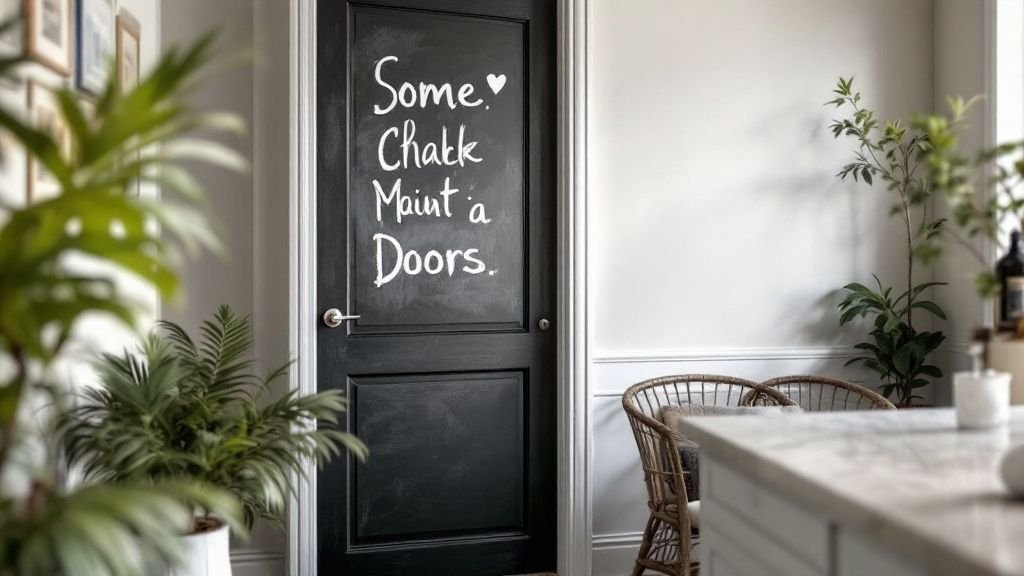
Choosing the best chalkboard paint for doors means balancing a smooth, erasable writing surface with dependable adhesion on your door’s material. This roundup compares six black paints by stated use, size, and price so you can quickly spot a fit for a wood, metal, or glass project. Our top pick is Rust-Oleum Black Chalkboard Paint: it’s a straightforward, purpose-made option for creating a classic matte message surface. For broader material compatibility or a larger container, the other chalkboard formulas may better suit your project; we’ve also flagged a door-and-trim paint that is not labeled as chalkboard paint, so it shouldn’t be mistaken for a writable finish. Check each label for surface preparation, indoor or outdoor suitability, and curing instructions before painting. Whether you’re making a family command center or a memo spot, these choices help you compare chalkboard door paint options without overlooking the details that matter.
Topics covered: chalkboard door paintwritable door surfacematte chalkboard finish chalkboard paint for wood doorsblack chalkboard paintdoor chalkboard paint
Rust-Oleum Black Chalkboard Paint is a versatile option for turning a plain door into a reusable writing surface. It earns our Best Overall pick for its broad surface compatibility, generous stated coverage, and relatively quick touch-dry time. If you’re looking for the best chalkboard paint for doors, this oil-based formula is worth considering for suitable indoor projects. It can also be used on wood, metal, masonry, drywall, plaster, glass, concrete, paperboard, and hardboard. Keep in mind that touch-dry doesn’t mean ready to write: Rust-Oleum recommends waiting 24 hours and conditioning the finished surface with chalk before use.
Key Features
✓
Works on multiple surfaces The formula is intended for a range of hard surfaces, including wood, metal, glass, drywall, and concrete. That flexibility can simplify a project involving a door and matching labels, panels, or other indoor surfaces.
✓
Oil-based interior formula Designed for indoor chalk-writing surfaces, the oil-based paint can be applied over a hard surface. Follow the product label’s preparation and application directions, especially when working on a previously painted door.
✓
Coverage and drying The stated coverage is 95–120 square feet, with drying to the touch in about 30 minutes. Actual coverage and drying can vary with the surface and conditions, so allow for preparation and any additional coats your project requires.
✓
Smooth, erasable finish The finish is described as scratch resistant and easy to erase after use. For best writing performance, wait 24 hours after application, rub the side of a piece of chalk across the surface, then erase it before using the board.
Performance & User Experience
For a kitchen or pantry door, the appeal is straightforward: a blank surface becomes a place for reminders, menus, or children’s drawings without adding a separate board. The listed coverage should be ample for many single-door projects, although door size, texture, and application technique affect the final result. Plan around the full 24-hour wait before writing, rather than the 30-minute touch-dry claim; that distinction matters if you want to use the door soon after painting. Conditioning with chalk is also an important first step for a more consistent writing surface. I can’t verify results on every listed material, so check the label and test an inconspicuous area if the door has an unusual coating.
Build Quality & Design
This is a paint-based solution rather than a framed board, so the finished look depends heavily on surface preparation and careful application. Its black finish suits many interiors and can make a door practical without taking up wall space. The stated scratch resistance is useful for regular writing and erasing, but it shouldn’t be treated as proof against heavy impacts or rough handling.
✓
Pros
• Broad surface compatibility: Useful when a project includes more than a standard wood door; the listed materials include metal, glass, and drywall.
• Good stated coverage: A 95–120-square-foot estimate can cover a door and potentially leave paint for touch-ups, depending on application.
• Quick touch-dry time: The 30-minute touch-dry claim helps with project planning, even though the surface needs longer before chalk use.
• Reusable writing surface: Chalk can be erased after use, making the painted door adaptable for changing notes, lists, and drawings.
✗
Cons
• Requires a full cure wait before writing: The recommended 24-hour wait and chalk conditioning add time before the door is ready for everyday use.
• Oil-based formula: Some buyers may prefer a different paint type for their project; review the label’s application, ventilation, and cleanup guidance before starting.
Best For: A homeowner or renter with permission to paint who wants a door to double as a family message board, menu space, or creative surface. It also suits DIYers seeking one product for several indoor hard surfaces and willing to prepare and condition the finish properly.
Our Verdict
Rust-Oleum Black Chalkboard Paint is a flexible, practical pick for a door makeover, with broad material compatibility and useful stated coverage. Its main trade-off is the time needed before writing: allow 24 hours and condition the surface as directed. For shoppers comparing the best chalkboard paint for doors, this is a strong all-around option when the door is suitable for an oil-based interior paint and you’re prepared to follow the application instructions. Check the current label for project-specific guidance before buying.
Chalkboard Paint Black Chalk Board Paint for Wood, Metal, Glass, Wall, Plaster Boards Sign, Frame, Interior/Exterior, Built-in Primer & Top Coat, Black Matte Finish, Acrylic, Non-Toxic, 350g, 12oz
This black chalkboard paint is positioned as a versatile option for turning doors, furniture, walls, and signs into writable surfaces. Its matte finish and claimed 35–40-square-foot coverage make it appealing for practical projects such as a family message board or a menu on a pantry door. I like that the listing emphasizes a built-in primer and top coat, which could simplify prep on suitable surfaces. For shoppers comparing the best chalkboard paint for doors, this product looks convenient on paper, but the surface still needs proper preparation and the coating needs time to cure before regular use.
Key Features
✓
Multi-surface use The paint is listed for wood, metal, glass, concrete, drywall, and plaster. That flexibility suits DIY projects, though adhesion can vary by material; clean, dry surfaces and any manufacturer-recommended primer remain important.
✓
Matte black writing surface A non-reflective finish is designed for chalk and liquid chalk markers. The listing claims clean erasing and scratch resistance, but performance may depend on conditioning the cured surface and using compatible markers.
✓
Fast touch-dry claim The product says it dries to the touch in about 15 minutes. Touch-dry does not necessarily mean ready to write on: the listing recommends waiting 24 hours and conditioning the surface with chalk before use.
✓
Coverage and application Brush or roller application is supported, with stated coverage of 35–40 square feet per 350 g unit. Actual coverage can be lower on porous or textured surfaces, so measure the project and consider a test patch.
Performance & User Experience
For an everyday door project, the main advantages are the broad surface compatibility and the promise of a smooth, erase-ready finish. A pantry door could become a grocery list station, while a child’s bedroom door might serve as a drawing area. The listed 15-minute touch-dry time may help when applying coats, but I would follow the full curing instructions rather than rush to write on it. The listing recommends conditioning after 24 hours by rubbing chalk over the surface and erasing it. One point to verify before buying is the formula description: the title calls it acrylic, while the feature copy calls it oil-based. Check the container label and follow its ventilation, cleanup, and drying guidance, especially for indoor use.
Build Quality & Design
The product is supplied in a 350 g (12 oz) container and is described as a black matte coating with built-in primer and top coat. The finish is intended to be washable and scratch-resistant, but those durability claims are not independently established here. Door edges and frequently touched areas may experience more wear than a wall, so careful application and allowing the coating to cure fully should help.
✓
Pros
• Useful for door makeovers: Creates a practical writing area for reminders, schedules, or kids’ drawings without requiring a separate board.
• Broad surface compatibility: Listed for several common materials, giving DIYers flexibility across doors, signs, furniture, and walls.
• Matte appearance: The non-reflective black finish suits menu boards and message areas where glare could make writing harder to read.
• Generous stated coverage: The claimed 35–40 square feet may cover multiple small projects, depending on surface texture and application.
✗
Cons
• Formula details are inconsistent: The product title says acrylic, while the feature text describes an oil-based formula. Confirm the label before choosing cleanup methods or using it indoors.
• Curing takes longer than touch-drying: The 15-minute claim is only for touch drying; the listing recommends waiting 24 hours and conditioning before writing.
Best For: A practical choice to consider for renters or homeowners refreshing a pantry, utility-room, or kids’ room door, as well as crafters making signs and small boards. It is less suitable for anyone needing a fully tested, highly durable finish for heavy daily use without confirming cure and care instructions.
Our Verdict
This paint offers a useful combination of matte black color, multi-surface claims, and convenient brush-or-roller application. Its stated coverage and quick touch-dry time are attractive, but they should not be mistaken for instant readiness: allow the recommended curing time, condition the board, and verify the conflicting formula description on the label. If you’re searching for the best chalkboard paint for doors for a straightforward home project, it is a promising budget-friendly option, with some uncertainty around formula and long-term wear. Rating: 4.0/5.
FolkArt FA2725 Multi-Surface Chalkboard Paint (16 Ounce), 2725 Black
FolkArt FA2725 is a water-based acrylic chalkboard paint for turning suitable surfaces into reusable places to write, draw, or leave reminders. Its 16-ounce jar is a practical size for projects such as a pantry door, a child’s art area, or several small signs. The rich black finish suits classic chalkboard designs, while soap-and-water cleanup is convenient when the paint is still wet. I’d consider it for the best chalkboard paint for doors when a project calls for a familiar black surface and a versatile craft paint. One important note: check the surface and application directions before starting, since preparation and coverage can affect the finished board.
Key Features
✓
16-ounce wide-mouth jar The generous size is useful for larger craft projects or treating multiple smaller areas. The wide opening should also make it easier to reach the paint with a brush.
✓
Chalkboard finish The formula is designed to create a writable chalkboard surface on craft and décor projects, including furniture. It offers flexibility beyond buying a premade board.
✓
Rich black color Its black finish gives the familiar look expected of a traditional chalkboard. Once dry, the surface should be conditioned by rubbing chalk across it and erasing.
✓
Water-based and easy to clean The non-toxic, water-based formula can be cleaned from tools and surfaces with soap and water while wet. It is made in the USA.
Performance & User Experience
For a door project, I’d first clean and prepare the surface, then follow the label’s application and drying guidance rather than rushing to write on it. After the paint is fully dry, the recommended chalk-conditioning step helps prepare the surface for everyday notes and drawings. A pantry or mudroom door could become a useful message center; a bedroom door might serve as a changing doodle space. The 16-ounce size is appealing if you want more than a small patch, though actual coverage depends on the surface, application, and number of coats. I’d test an inconspicuous area first, especially on a previously finished door. Wet cleanup is straightforward in principle, but dried paint will require more effort to remove.
Build Quality & Design
This is paint in a wide-mouth plastic jar rather than a finished chalkboard panel, so the final durability depends partly on surface preparation and application. The water-based formula is convenient for indoor craft work, and the black finish has a simple, classic appearance. For a frequently handled door, careful application and adequate drying matter; the supplied details do not specify coverage or long-term wear resistance.
✓
Pros
• Useful quantity: Sixteen ounces can suit a door-sized project or several smaller crafts, making it more versatile than a tiny sample container.
• Adaptable for décor: The paint can turn suitable furniture and home décor surfaces into writable areas, not just create standalone signs.
• Straightforward wet cleanup: Soap-and-water cleanup while the paint is wet is practical for home crafting and helps limit mess around the project.
✗
Cons
• Requires surface preparation: A smooth, clean door may need preparation before painting, so this is not necessarily a quick, no-prep solution.
• Coverage details are not provided: The listed information does not state square-foot coverage or coat requirements. Estimate conservatively for a large door and check the label.
Best For: A good fit for DIYers making a kitchen message board, parents creating a drawing area, or crafters painting signs and décor. It is best for users comfortable preparing a surface and allowing paint to dry before conditioning and use.
Our Verdict
FolkArt FA2725 is a versatile, approachable option for a DIY chalkboard surface, with a useful 16-ounce quantity, classic black color, and convenient wet cleanup. It is not a ready-made board, and the final result depends on your door’s surface and careful application. For anyone comparing the best chalkboard paint for doors, this is a sensible everyday-use pick for household notes and creative projects, provided you follow the preparation and conditioning directions. Check current instructions and coverage expectations before buying.
Chalkboard Paint, 35 Oz Black Chalk Board Paint for Wall, Wood,Metal,Glass
This 35-ounce black chalkboard paint stands out for pairing a generous-size container with a practical prep-and-paint kit. If you’re looking for the best chalkboard paint for doors, its stated compatibility with wood and properly prepared surfaces makes it worth considering for a pantry door, playroom feature, or household message board. The water-based acrylic formula is also listed for walls, metal, glass, and craft boards, offering flexibility beyond a single project. I’m assessing it from the supplied specifications rather than a hands-on application, so coverage, finish smoothness, and durability will depend on preparation and use.
Key Features
✓
Broad surface compatibility The manufacturer lists walls, wood, drywall, furniture, metal, glass, craft boards, and signs. That range supports projects such as a writable cabinet door, classroom area, or reusable café menu, provided each surface is properly prepared.
✓
35-ounce water-based acrylic formula The larger container is intended for projects bigger than a small craft panel. Water-based acrylic is a convenient format for home DIY, though the product details do not state coverage, VOC level, or cleanup instructions.
✓
Included prep and painting supplies The kit includes a brush, roller, gloves, masking film, painter’s tape, and sandpaper. Having basic supplies together can simplify setup, but check tool sizes and suitability for your project before starting.
✓
Curing and conditioning guidance The listed directions call for thin coats, 2–4 hours between coats, and at least 24 hours before conditioning. Rubbing regular chalk over the cured surface before use is intended to support writing and erasing.
Performance & User Experience
For a door project, the wide surface compatibility and included sanding and masking supplies are appealing: smooth preparation and careful protection around hinges and trim matter for a clean result. The maker recommends thin, even coats and waiting 2–4 hours between applications, followed by at least 24 hours of curing before conditioning. That timeline means this is not a same-day write-on solution. Once conditioned, the paint is intended for regular chalk and most liquid chalk markers, although the listing sensibly recommends testing markers in a discreet spot. No coverage-per-container, coat count, or independent performance data is provided, so estimate quantities conservatively and follow the label directions.
Build Quality & Design
The paint is described as water-based acrylic, and the package includes basic application and surface-prep accessories. Those details suggest a convenient DIY kit, but they don’t establish the durability of the finished coating or the quality of each tool. On doors, careful sanding, cleaning, and thin coats are especially important because handles and frequent contact can expose an uneven or poorly prepared finish. Follow the product’s surface-specific instructions.
✓
Pros
• Useful kit contents: Brush, roller, tape, masking film, gloves, and sandpaper reduce the need to gather basic supplies separately.
• Versatile project options: Listed use on wood, walls, metal, and glass suits more than one household chalkboard project.
• Generous container size: At 35 ounces, it may be more practical than a small bottle for a larger door or wall area.
• Clear cure guidance: The stated wait and conditioning steps help set realistic expectations before the first use.
✗
Cons
• Coverage is unspecified: Without a coverage estimate or recommended coat count, it’s difficult to know whether one container will finish a full door.
• Requires preparation and patience: Sanding, multiple thin coats, curing, and conditioning add time; rushing can undermine the writable finish.
Best For: A DIY homeowner planning a chalkboard pantry or playroom door, families making a reusable message surface, teachers, and small businesses creating signs may appreciate the kit. It is less suited to anyone needing exact coverage estimates or a finished surface immediately.
Our Verdict
This is a thoughtfully bundled option for turning a properly prepared door into a reusable writing surface, with a 35-ounce container and useful prep accessories as its strongest advantages. The main unknowns are coverage and finished-coating durability, so plan carefully and follow the cure and conditioning directions. For shoppers comparing the best chalkboard paint for doors, it earns consideration as a premium-style, versatile kit—but verify the label’s surface instructions and project coverage before buying. Rating: 4.2/5 based on the listed features; hands-on results may vary.
Rust-Oleum 369383 Advanced Dry Door & Trim Paint, Quart, Satin Black
If you’re searching for the best chalkboard paint for doors, note that this Rust-Oleum product is not chalkboard paint: it dries to a satin finish and isn’t designed for writing or erasing with chalk. It is, however, a ready-to-use satin black door and trim paint for refreshing metal, wood, or fiberglass. Its quick-drying water-based formula and indoor/outdoor versatility make it a practical everyday option for a straightforward repaint.
Key Features
✓
Multi-surface use The premixed paint is intended for interior or exterior metal, wood, and fiberglass doors and trim. Check that your specific surface is suitable and properly prepared before painting.
✓
Water-based formula A water-based formula produces less odor than many oil-based paints, which can be welcome when painting indoors. The manufacturer also says the finish withstands fading.
✓
Fast touch-dry time Rust-Oleum states that it dries to the touch in about 45 minutes—up to three times faster than traditional oil-based paints. Touch-dry does not necessarily mean fully cured or ready for heavy use.
✓
Satin, chip-resistant finish The satin black coating offers a restrained sheen and is described as chip resistant. It’s intended to protect doors while giving them a clean, updated appearance.
Performance & User Experience
For a typical refresh—such as repainting a scuffed interior door or updating exterior trim—the ready-to-use format saves the step of mixing, while the stated 45-minute touch-dry time can help keep a project moving. The low-odor water-based formula is also convenient in occupied spaces, though ventilation and the label’s application directions still matter. I would allow adequate drying and curing time before closing a freshly painted door against its frame; touch-dry paint can still mark or stick if pressed too soon. This is a satin door paint, not an erasable chalkboard finish, so it won’t meet the needs of a door intended for chalk notes.
Build Quality & Design
The product is a quart of liquid paint rather than a specialty chalkboard coating. Its intended durable, chip-resistant finish suits frequently handled doors, but final results depend on surface cleaning, preparation, application, and curing. Satin black is versatile and less glossy than semi-gloss, though it may show dust or scratches more than lighter colors.
✓
Pros
• Ready to use: Premixed paint makes small door and trim updates simpler.
• Broad surface compatibility: Designed for metal, wood, and fiberglass, indoors or outdoors.
• Quick touch-dry claim: The stated 45-minute time can help shorten waits between project steps.
• Lower-odor formula: Water-based paint is a practical choice for many indoor projects.
✗
Cons
• Not chalkboard paint: The satin finish is not made for chalk writing or wipe-off use, despite the category search term.
• Cure time still matters: Touch-dry in 45 minutes does not mean the coating is ready for immediate wear or contact.
Best For: Homeowners who want satin black door paint for a routine refresh on compatible wood, metal, or fiberglass surfaces. It is not the right pick for anyone seeking a writable chalkboard door.
Our Verdict
Rust-Oleum Advanced Dry is a convenient everyday satin black door and trim paint, with a water-based formula, multi-surface use, and a manufacturer-stated 45-minute touch-dry time. At $17.97, it’s worth considering for a simple repaint, provided you prepare the surface and allow proper curing. But shoppers looking for the best chalkboard paint for doors should choose a product specifically labeled for chalkboard use; this one provides a standard satin finish, not a writable surface.
FolkArt Chalkboard Paint in Assorted Colors (8-Ounce), 2517 Black
For a modestly priced way to turn a door or craft surface into a reusable writing space, FolkArt’s 8-ounce black formula is a practical pick. It earns our Best Budget spot for its versatile jar size, water-based formula, and straightforward soap-and-water cleanup while wet. If you’re searching for the best chalkboard paint for doors, note that the listing describes use on furniture and home décor, but doesn’t specify door materials or coverage. I’d plan a small test patch and follow the label’s application and drying directions before tackling a full door.
Key Features
✓
8-ounce wide-mouth jar The roomy container is convenient for dipping a brush and handling small-to-medium craft projects. For a larger door, check the product label for coverage and estimate how much paint your surface will require.
✓
Chalkboard finish The acrylic paint is intended to create a surface for chalk writing. Once dry, condition it by rubbing chalk over the entire area and erasing, as the manufacturer directs.
✓
Rich black color Black provides a familiar chalkboard look that suits message boards, furniture accents, and décor. A test area can help you assess the appearance on your particular surface.
✓
Water-based cleanup The non-toxic, water-based formula can be cleaned up with soap and water while wet. That’s convenient for household projects, but it doesn’t eliminate the need to protect nearby surfaces.
Performance & User Experience
For a door project, I’d first make sure the surface is clean, sound, and compatible with the paint, then test an inconspicuous spot. The product information promises smooth application and says the formula is easy to condition after drying; it does not provide a coverage figure, drying time, or detailed surface-preparation guidance. Those omissions matter when planning a large writing area, so check the jar instructions and allow the coating to dry fully before conditioning it. After conditioning, try ordinary chalk and an eraser on the test patch to judge how it writes and cleans. This chalkboard acrylic paint is also suited to smaller décor and craft jobs, where the 8-ounce size is easier to manage. Cleanup is simplest before the paint dries.
Build Quality & Design
This is paint in a wide-mouth plastic jar rather than a pre-made board or roll-on coating system. The packaging should be handy for craft brushes and small projects, though careful storage and a secure lid are sensible to prevent spills or drying. FolkArt identifies the formula as made in the USA and water-based. No durability or washability details are given, so I wouldn’t assume the finished surface will withstand heavy daily use without checking the label.
✓
Pros
• Budget-friendly size: The 8-ounce jar offers an approachable entry point for trying a chalkboard finish or handling modest home décor projects.
• Useful for multiple projects: The manufacturer lists furniture, décor, and gifts, giving crafters more options than a single-purpose door coating.
• Simple wet cleanup: Soap and water cleanup while wet can make brush care and accidental drips less troublesome.
• Clear conditioning step: The instructions explain how to condition the dried surface with chalk before use, helping set expectations for setup.
✗
Cons
• Coverage is unspecified: The listing provides no square-foot coverage, so estimating the amount needed for a full door may take extra planning.
• Limited performance details: Drying time, coat count, and long-term durability aren’t specified in the supplied product information; consult the jar before starting.
Best For: A good fit for budget-conscious crafters, DIYers adding a chalkboard area to furniture or décor, and anyone testing a writing surface on a door. It’s less suitable for buyers who need a guaranteed coverage estimate or detailed heavy-use durability specifications.
Our Verdict
FolkArt’s 2517 Black is a versatile, affordable chalkboard acrylic paint for small projects and carefully planned door updates. Its water-based formula, black finish, and simple conditioning process make it accessible to casual DIYers, while the 8-ounce size keeps the initial purchase manageable. The main caveat is missing coverage and durability information, which makes a test patch and label check especially important on a full door. If you want the best chalkboard paint for doors on a budget and can verify project requirements, this is a sensible option to consider.
The best chalkboard paint for doors should create a smooth, durable writing surface without interfering with how the door opens, closes, or looks in your room. Before buying, consider the door material, surface preparation, coverage, and time needed for the paint to cure. Comparing these details helps you choose a chalkboard coating that erases cleanly and suits your budget, whether you’re updating a pantry door, playroom, or home office.
Key Factors to Consider
1
Surface Compatibility and Adhesion
Doors may be wood, metal, laminate, or previously painted, and the wrong formula can peel or scratch with regular use.
Check the label for compatible surfaces and whether the paint needs a primer. Clean glossy doors and lightly sand them to improve adhesion. For laminate or slick finishes, use a suitable bonding primer; bare wood may need a compatible primer to prevent uneven absorption.
💡 Choose a formula rated for your door material; use bonding primer on slick surfaces.
2
Application and Coverage
Even coverage matters on a prominent, frequently handled surface, while easy application helps prevent streaks and visible brush marks.
Compare the listed coverage per coat with the door’s dimensions, and check whether the product is brush-on, roller-friendly, or spray-applied. A small foam roller can help produce a smooth finish on flat panels. Follow the maker’s instructions for coats and recoat intervals.
💡 Plan on two thin coats; confirm the can’s stated coverage and recoat time.
3
Writing and Erasing Performance
A chalkboard finish should take writing clearly and erase without leaving persistent haze or ghosting after repeated use.
Look for a product specifically labeled as chalkboard paint, rather than ordinary matte paint. A smooth, even coating generally offers a more dependable writing surface. Check product directions for seasoning the finish—often rubbing chalk over the cured surface and wiping it off before first use.
💡 Choose a dedicated chalkboard coating and follow its curing and seasoning directions.
4
Durability and Finish
Door surfaces receive hand contact, bumps, and frequent cleaning, so a fragile coating can wear faster than paint on a wall.
Review guidance on cleaning, abrasion resistance, and indoor use. A matte finish is typical for chalkboard paint, but smooth preparation is important to prevent rough patches that catch chalk or a cloth. Consider how often the door will be used and cleaned.
💡 Prioritize washable, scuff-resistant formulas for busy doors; test a small area first.
5
Drying, Curing, and Indoor Use
Dry-to-touch time is not the same as full cure, and using the door too soon can damage the finish or impair writing.
Check the label for ventilation, odor, recoat timing, and full-cure instructions. Keep the door from rubbing against its frame while the coating hardens. For a child’s room or enclosed space, review the manufacturer’s indoor-use and safety information rather than assuming all paints have the same emissions.
💡 Allow the full labeled cure time before writing, cleaning, or closing tightly.
Common Mistakes to Avoid
⚠️
Skipping surface preparation Dust, grease, glossy paint, or loose coating can prevent chalkboard paint from bonding, leading to peeling or an uneven writing surface. Clean the door thoroughly, repair defects, and sand glossy areas as directed. Use the recommended primer for the material, then remove sanding dust before painting.
⚠️
Writing on the door before the paint cures A surface that feels dry may still be soft underneath. Early writing, wiping, or contact with the door frame can leave marks and damage the finish. Follow the product’s full curing schedule, which may be longer than its drying time, and season the surface only when instructions allow.
⚠️
Buying based on can size alone Coverage varies by product and surface, and textured or absorbent doors may need more paint than expected. Check the stated coverage and number of recommended coats, then estimate the door’s paintable area. Buying too little can leave inconsistent color, while excess paint may go unused.
Price Ranges
Budget-Friendly
$9-$14
This tier includes entry-level options around the listed $9.42, $10.38, and $13.99 prices. Expect a basic chalkboard finish and carefully check the can size, coverage, and surface requirements. It can suit a small door or occasional use, but good preparation and application matter especially at this price.
Best Value
$15-$19
Around $17.48 and $17.97, products may offer a practical balance of coverage, application, and everyday performance. Compare compatible surfaces, finish instructions, and customer-use details rather than assuming price guarantees quality. This tier is a sensible place to look for a frequently used pantry or playroom door.
Premium
$20-$25+
The listed $24.99 price sits at the top of this sample range. A higher price may reflect a larger can, a specialized formula, or brand positioning, but does not automatically mean better erasability. Check coverage, durability guidance, and cure time to confirm the added cost fits your door and expected use.
Frequently Asked Questions
?
What is the best chalkboard paint for doors overall?
Rust-Oleum Black Chalkboard Paint is the top pick for creating a classic, writable surface on a door. It suits projects where a simple black chalkboard finish is the goal. For a durable result, clean and prepare the door, follow the product label for application and drying, and allow the recommended cure time before writing.
?
Which best chalkboard paint for doors is a good value option?
Chalkboard Paint Black Chalk Board Paint for Wood, Metal, Glass, Wall, Plaster Boards Sign, Frame is a versatile option to compare for value. Its listing describes a built-in primer and top coat, matte black finish, and multiple compatible surfaces. Check the current price, coverage, and directions to see whether it fits your door and project.
?
What is the best chalkboard paint for doors made of wood?
All three featured paints may suit a wooden door when the product label confirms compatibility. Rust-Oleum is the overall pick, while the multi-surface black paint specifically lists wood among its intended surfaces. Start with a clean, sound surface, lightly sand glossy areas if directed, and use the label’s instructions for coats and cure time.
?
How does Rust-Oleum chalkboard paint compare with FolkArt FA2725?
Rust-Oleum Black Chalkboard Paint is the roundup’s best overall choice, while FolkArt FA2725 Multi-Surface Chalkboard Paint is a 16-ounce alternative for projects needing a multi-surface product. Compare the labels for door-material compatibility, application guidance, coverage, and drying or cure times. These details matter more than the brand name when planning a lasting chalkboard finish.
?
How should I prepare a door before applying chalkboard paint?
Remove dirt, grease, loose paint, and hardware where practical, then let the door dry. Smooth rough spots and address peeling areas before painting; follow the chosen paint’s label for sanding, primer, and coat recommendations. Good surface preparation helps chalkboard paint adhere evenly and creates a smoother writable surface for notes, lists, or drawings.
?
How do I care for a door painted with chalkboard paint?
Wait until the paint has fully cured according to its label before writing or erasing. Use chalk and a soft, dry eraser or cloth, and avoid abrasive cleaners that could mark the matte chalkboard finish. For routine cleanup, follow the manufacturer’s care directions; moisture resistance and cleaning limits can vary by product and door location.
Final Verdict
The best chalkboard paint for doors depends on the door material, project size, and finish you want. Rust-Oleum Black Chalkboard Paint is the top overall recommendation for a traditional black writable surface. For a versatile alternative, consider Chalkboard Paint Black Chalk Board Paint for Wood, Metal, Glass, Wall, Plaster Boards Sign, Frame, which lists several compatible surfaces and a built-in primer and top coat. FolkArt FA2725 Multi-Surface Chalkboard Paint is another option, offered in a 16-ounce size. Compare current prices, surface compatibility, coverage, and application instructions before buying. Proper cleaning and preparation, followed by the stated cure time, help support a smooth chalkboard finish.
🏆
Best Overall
Rust-Oleum Black Chalkboard Paint
The roundup’s leading choice for a classic black, writable door surface.
💰
Best Value
Chalkboard Paint Black Chalk Board Paint for Wood, Metal, Glass, Wall, Plaster Boards Sign, Frame
A multi-surface contender with a listed built-in primer and top coat; compare current pricing and coverage.
👑
Best Premium
FolkArt FA2725 Multi-Surface Chalkboard Paint (16 Ounce), 2725 Black
A named multi-surface option in a 16-ounce size for projects that suit its label directions.
💡 Expert Tip
Before purchasing, verify that the paint is suitable for your specific door material and intended location. Read the label for surface preparation, number of coats, ventilation, drying, and cure time; these instructions can differ between formulas. Test the finish in an inconspicuous spot if appearance is important, and wait for full cure before using chalk. Product listings and prices can change, so confirm current details with the retailer and manufacturer. Careful preparation and realistic expectations are reliable ways to get a neat, usable chalkboard surface.