
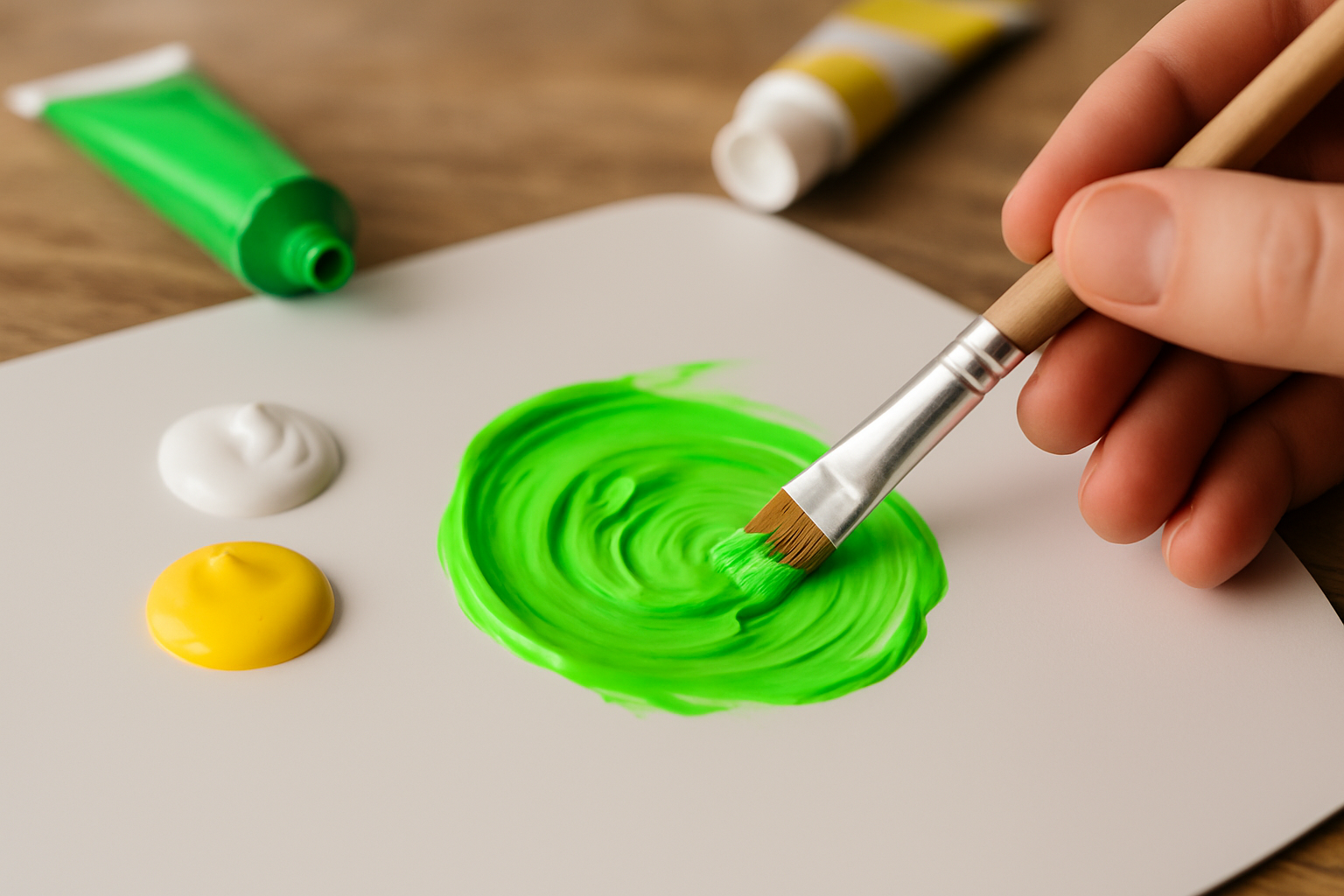
How to Make Neon Green Paint with Acrylic Paint Easily
Are you looking to create vibrant neon green paint with acrylics for your next art project? Mixing colors can be a daunting task, especially when aiming for that perfect, eye-catching hue. With years of experience in color theory and paint mixing, I’m here to guide you through the simple yet effective steps to achieve a stunning neon green shade. In this article, you’ll learn about the essential ingredients, techniques, and tips to make your own neon green paint at home. Whether you’re a beginner or an experienced artist, you’ll find valuable insights that will enhance your painting experience and help you achieve the vivid colors you desire.
Understanding Neon Colors and Their Components
Neon colors are vibrant and striking, often used to draw attention in art and design. Neon green, in particular, is a bright and eye-catching hue that can enhance any project. To create neon green paint with acrylics, it’s essential to understand the components that contribute to its luminosity. Neon colors typically use fluorescent pigments, which are designed to reflect light in a way that makes them appear to glow. These pigments can be mixed with traditional acrylics to achieve the desired effect. Understanding the science behind color mixing will help you create a neon finish that stands out in your artwork.
The Color Wheel and Neon Green
To effectively mix neon green, it’s crucial to understand its place on the color wheel. Neon green is a bright, vivid shade of green that is typically made by mixing a smaller amount of blue with yellow. This understanding aids in achieving a balanced neon hue. When blending colors, start with a base of bright yellow and gradually introduce blue until you reach the desired shade of neon green.
The Role of Fluorescent Pigments
Fluorescent pigments are essential for achieving the neon effect. These pigments absorb and re-emit light, providing that glowing appearance. When mixing your acrylic paint, consider adding a small amount of fluorescent green or yellow pigment to enhance the brightness of your neon green. This will ensure that your final color maintains that vibrant, eye-catching quality.
Key Points:
- Neon green is achieved by mixing yellow and blue.
- Fluorescent pigments enhance the brightness of colors.
Step-by-Step Guide to Making Neon Green Paint
Creating neon green paint with acrylics is a straightforward process that can be accomplished with the right approach. Begin by gathering your materials, including primary acrylic colors: yellow and blue, along with any fluorescent pigments you wish to incorporate. The mixing process is crucial; start by using a palette and a mixing tool to combine your colors. Adjust the ratios according to your desired shade. For a more intense neon effect, experiment with adding fluorescent pigments one drop at a time until you achieve the luminosity you want. Remember to test your paint on a small surface to ensure it meets your expectations before applying it to your main project.
Gathering Your Materials
To create neon green paint, you will need primary acrylic colors: bright yellow and blue. Additionally, consider fluorescent green or yellow pigments for enhancing brightness. A mixing palette, a spatula or paintbrush for mixing, and a surface for testing are also essential. Having everything ready ensures a smoother mixing process.
Mixing Techniques for Best Results
When mixing your colors, start with a small amount of yellow as your base and gradually add blue until you reach the desired shade. If using fluorescent pigments, add them incrementally to avoid overpowering the base color. Mix thoroughly to ensure a consistent color and test on paper to see the final result under various lighting conditions.
Key Points:
- Start with a base of yellow, then add blue.
- Test your color on a small surface before full application.
Understanding Color Mixing Basics
To create neon green paint with acrylics, it’s essential to grasp the fundamentals of color mixing. Neon colors often require a bright, vibrant base, typically achieved through the combination of primary colors. In this case, the mix of yellow and blue is crucial, as yellow is a warm primary color, while blue is a cool primary color. The key is to use a high ratio of yellow to blue to achieve the desired neon effect. Additionally, the brightness and vibrancy can be influenced by the use of a white base or a specific mixing medium that enhances brightness.
Primary Colors and Their Roles
In color theory, primary colors are the foundation of all other colors. Yellow and blue are the primary colors that, when mixed, can create green. However, for neon green, the yellow should dominate the mix. Understanding the role of these colors helps in manipulating the outcome effectively.
The Importance of Brightness
Neon colors are characterized by their brightness and vibrancy. To achieve neon green, adding a small amount of white paint can help lighten the mixture without dulling the brightness. This technique is crucial in obtaining that luminous quality associated with neon shades.
Key Points:
- Primary colors are fundamental in creating secondary colors.
- Brightness is crucial for achieving a neon effect.
💡 Mix colors gradually to control the shade; this helps avoid an overly dark or muddy color.
💡 Use a palette knife for mixing to achieve a smooth consistency and uniform color throughout.
💡 Experiment with different ratios until you find the perfect neon green that suits your project.
Advanced Techniques for Vibrant Neon Green
Once you understand the basics, you can explore advanced techniques to enhance your neon green acrylic paint. Incorporating certain additives can amplify the vibrancy, while specific application methods can ensure the color stands out on your canvas. Using a glossy medium or varnish can further enhance the neon effect once the paint dries, making it appear even more luminous. Additionally, layering techniques can add depth and variation to your neon green, creating more dynamic visuals.
Using Additives for Enhanced Color
Additives such as gloss mediums can be mixed into your paint to increase shine and vibrancy. These mediums not only improve the paint’s finish but also help retain the luminosity of the neon color, making it pop even more on the surface.
Layering for Depth
Applying multiple thin layers of neon green can create a richer and more complex color. Allow each layer to dry before applying the next, as this builds depth and intensity. Experiment with varying opacity to create interesting visual effects.
Key Points:
- Additives can enhance the vibrancy of neon colors.
- Layering techniques contribute to the depth and complexity of the color.
💡 Always test your paint on a small area before applying it to your main piece to gauge the final color.
💡 Consider using a blacklight to see how your neon paint reacts under UV light, which can enhance the neon effect.
💡 Keep your workspace well-lit to better judge color accuracy during mixing.
EXPERT TIPS Pro Advice
Start with a small batch
Creating a small batch allows for experimentation without wasting materials. It helps fine-tune the color ratio before committing to a larger amount.
Mix on a non-porous surface
Using a non-porous surface like glass or acrylic for mixing prevents absorption, allowing for better control over the paint consistency and color.
Use quality brushes for application
Quality brushes can affect how the paint applies and adheres to the surface, impacting the final appearance of your neon green paint.
Frequently Asked Questions
Conclusion
Creating neon green paint with acrylics involves mixing yellow and blue in specific ratios. You can enhance brightness and create glow-in-the-dark effects using phosphorescent powders. Proper storage and surface choice are also crucial for maintaining vibrancy.
🎯 Key Takeaways:
- Mix equal parts bright yellow and blue to achieve neon green.
- Add phosphorescent powder for a glow-in-the-dark effect.
- Use white paint sparingly to lighten without dulling vibrancy.
- Store in airtight containers in cool, dark conditions.
- Best results on smooth, light-colored surfaces.
Expert Advice: Experiment with different ratios and techniques to find your perfect shade of neon green. Don’t hesitate to test your mixes on scrap materials before committing to your final piece.
Now that you know how to make neon green paint, try mixing your own and explore creative applications in your next art project!