
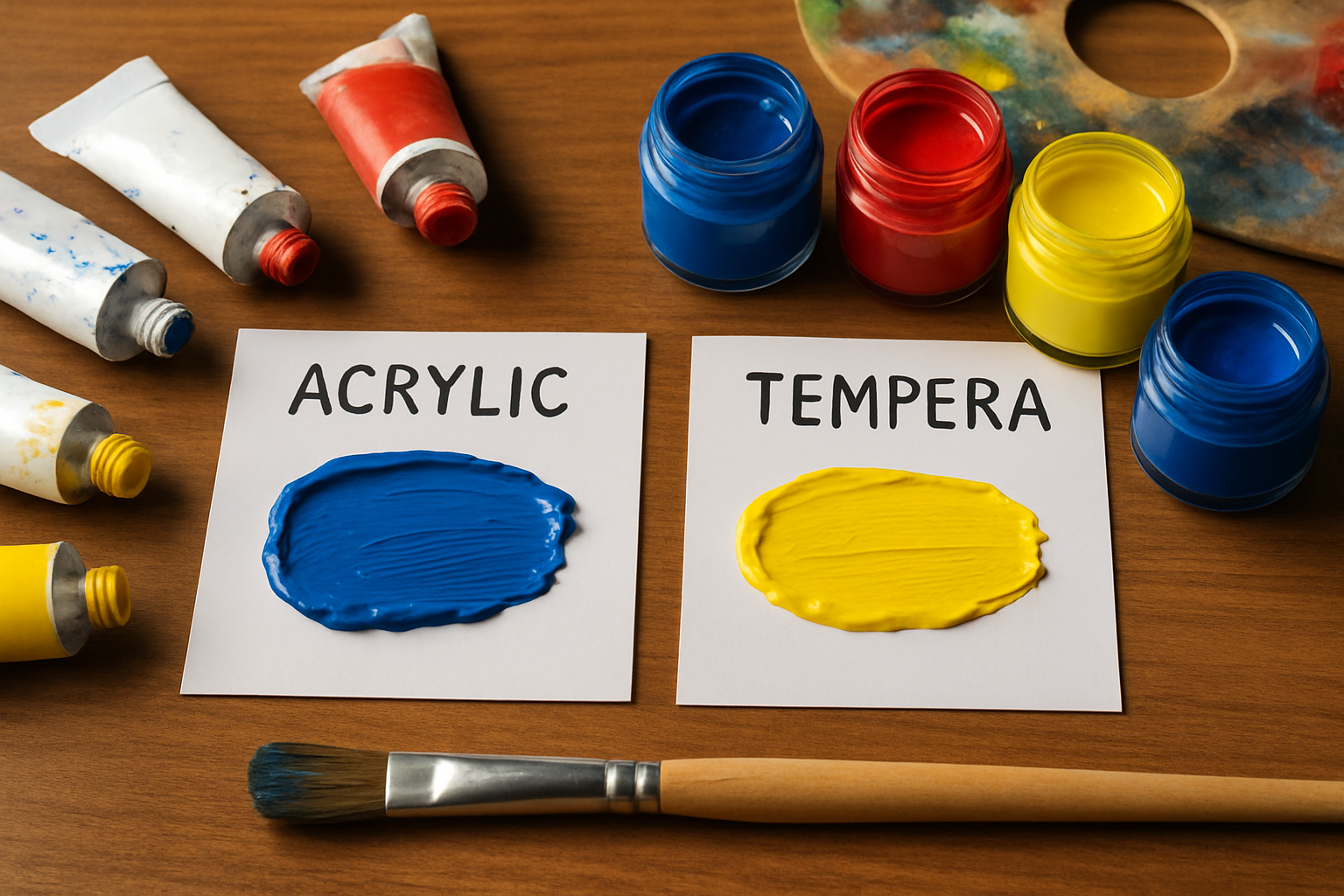
What is the Difference Between Acrylic and Tempera Paint?
Are you confused about what is the difference between acrylic and tempera paint? Many artists, especially beginners, often struggle to choose the right medium for their projects. While both acrylic and tempera paints are popular choices, they have distinct properties that affect their application, drying time, and finish. As a seasoned artist and educator, I have explored these two mediums extensively and can help clarify their differences. In this article, you will learn about the unique characteristics of acrylic and tempera paints, their ideal uses, and how to select the right one for your artistic needs. Whether you are painting for fun or pursuing a professional career, understanding these differences will enhance your creative process.
Understanding Acrylic Paint
Acrylic paint is a fast-drying medium composed of pigment suspended in an acrylic polymer emulsion. Its versatility makes it suitable for a variety of surfaces, including canvas, wood, and even textiles. Artists appreciate acrylics for their vibrant colors and ability to mimic both watercolors and oil paints. The quick drying time allows for layering and blending techniques, making it ideal for artists who work quickly or wish to build texture in their paintings.
Properties of Acrylic Paint
Acrylic paint is water-soluble when wet, allowing for easy cleanup. Once dry, it becomes water-resistant, making it durable for various applications. Its flexibility and adherence to surfaces make it a favorite among modern artists. The range of finishes from matte to glossy also enhances its appeal.
Uses of Acrylic Paint
Acrylics are widely used in fine arts, crafts, and even home décor. Artists can use them for techniques like pouring, glazing, or impasto. Additionally, acrylics are popular in educational settings due to their ease of use and non-toxic nature, making them suitable for children.
Key Points:
- Acrylics dry quickly, allowing for layered techniques.
- They are versatile and can be used on various surfaces.
Understanding Tempera Paint
Tempera paint is a water-based medium traditionally made from colored pigments mixed with a water-soluble binder, commonly egg yolk. This type of paint has been used for centuries, particularly in the creation of murals and panel paintings. Tempera provides a matte finish and can create detailed works due to its quick-drying nature, which allows artists to build up layers effectively.
Characteristics of Tempera Paint
Tempera is known for its vibrant colors and matte finish. It dries quickly and requires a careful application to achieve smooth layers. Unlike acrylics, tempera remains water-soluble even after drying, which can limit its durability when exposed to moisture.
Applications of Tempera Paint
Tempera is often used in educational settings and by beginner artists due to its ease of use and non-toxic nature. It is ideal for projects requiring fine detail and is commonly used in crafting and decorative art. While tempera is less versatile than acrylic, it is cherished for its traditional qualities in historical art forms.
Key Points:
- Tempera paint is water-soluble even after drying.
- It is traditionally used for fine detail work and murals.
Understanding Acrylic Paint
Acrylic paint is a water-based medium known for its versatility and quick drying time. It is made from pigment suspended in acrylic polymer emulsion, which allows for a wide range of applications, from thick impasto techniques to thin washes. Acrylics can be diluted with water, making them easy to work with, and they can mimic the look of both oil and watercolor paints, depending on the amount of water used. Once dry, acrylic paint becomes water-resistant, making it suitable for various surfaces, including canvas, paper, and wood.
Properties of Acrylic Paint
Acrylic paint is non-toxic, making it safe for artists of all ages. The fast drying time allows for layering techniques, as artists can quickly apply subsequent coats without waiting long. Additionally, acrylics can be mixed with various mediums to alter texture and finish, providing creative flexibility.
Application Techniques
Acrylics can be applied using brushes, palette knives, or even sponges, allowing for diverse textures and effects. Artists often use layering, glazing, and dry brushing techniques to achieve different looks. The paint can also be thinned for washes or mixed with gels for a thicker consistency.
Key Points:
- Acrylics dry quickly and become water-resistant.
- Versatile application techniques enhance creative expressions.
💡 Experiment with dilution to explore different textures and finishes.
💡 Use a palette knife for impasto effects, adding depth to your artwork.
Exploring Tempera Paint
Tempera paint is a fast-drying, water-soluble medium that has been used for centuries. Traditionally made with pigment mixed with a water-soluble binder such as egg yolk, modern tempera often uses synthetic binders. It is known for its matte finish and vibrant colors. Unlike acrylics, tempera paint remains water-soluble even after drying, making it easy to rework or blend. This quality makes it especially suitable for educational settings and children’s art projects.
Characteristics of Tempera Paint
Tempera paint is characterized by its bright colors and smooth application. It dries quickly but retains a soft, matte finish. The paint can be reactivated with water, allowing artists to modify their work even after the paint has dried, which is a unique feature compared to acrylics.
Best Practices for Using Tempera
To achieve the best results with tempera paint, use a heavier weight paper or cardboard as your canvas to prevent warping. Layering colors can create depth, but care must be taken as overworking can lead to muddy results. It’s also advisable to work in thin layers to maintain vibrancy.
Key Points:
- Tempera remains water-soluble even after drying.
- Ideal for educational purposes due to its ease of use.
💡 Use a heavier paper for tempera to avoid warping during drying.
💡 Experiment with layering, but limit the number of layers to prevent muddiness.
EXPERT TIPS Pro Advice
Understand the drying times of both paints.
Knowing how quickly each type dries can help you plan your painting sessions and layering techniques effectively.
Choose your surface wisely.
The choice of surface can significantly affect the final look of your artwork. Acrylics work well on many surfaces, while tempera performs best on paper or cardboard.
Mixing mediums can enhance your work.
Consider combining acrylics with mediums for texture or tempera with additives for different effects. This can broaden your creative possibilities.
Test before committing to a larger piece.
Always test your techniques and color combinations on a smaller scale to avoid unforeseen issues in your final artwork.
Preserve your work appropriately.
Understanding how to protect your finished artwork from moisture and UV exposure is crucial for both acrylic and tempera paintings.
Frequently Asked Questions
Conclusion
Understanding the differences between acrylic and tempera paint can help you select the right medium for your projects. Acrylic is versatile and durable, while tempera is ideal for educational use and easy cleanup. Each paint has unique properties that cater to different artistic needs.
🎯 Key Takeaways:
- Acrylic paint is water-resistant and versatile.
- Tempera paint remains water-soluble after drying.
- Acrylic is preferred for professional artwork.
- Tempera is better suited for children’s projects.
- Mixing these two paints is generally not advisable.
Expert Advice: Consider your project’s requirements, the desired finish, and the age of the users when choosing between acrylic and tempera paint. Each medium has its strengths and weaknesses, so understanding these can enhance your creative process.
Explore different techniques using both acrylic and tempera paints to find which best suits your style and needs.