
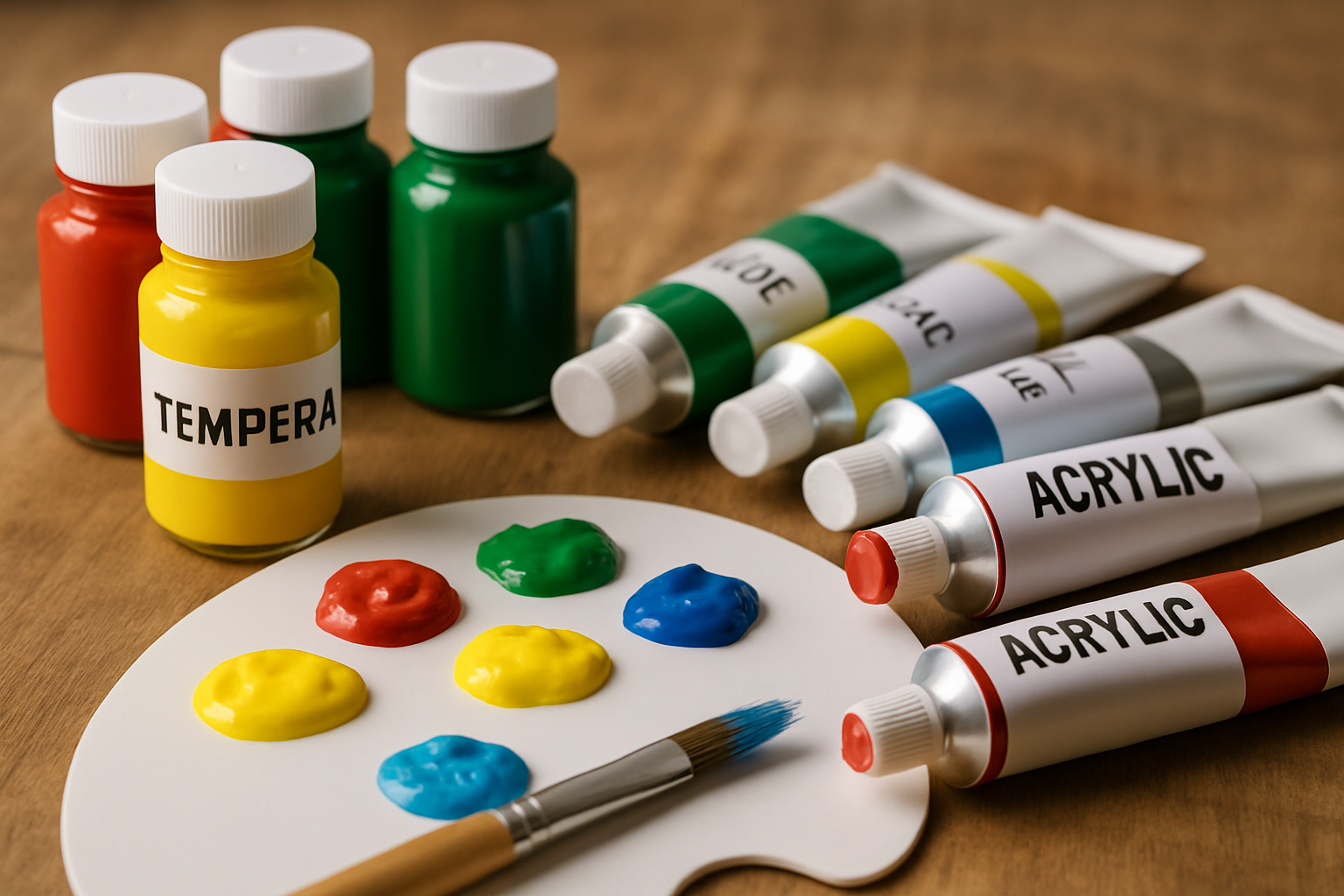
What is Tempera Paint vs Acrylic: Key Differences Explained
Are you confused about the differences between tempera paint and acrylic? Many artists and hobbyists struggle to choose the right medium for their projects. Tempera paint, known for its vibrant colors and quick-drying properties, differs significantly from acrylic paint, which offers versatility and durability. As an experienced artist and educator, I understand the importance of selecting the right paint for your creative needs. In this article, we will explore the unique characteristics of tempera and acrylic paints, their best uses, and how to choose the right one for your artwork. By the end, you’ll have a clear understanding of what is tempera paint vs acrylic and how to utilize each effectively in your creative endeavors.
Understanding Tempera Paint
Tempera paint is a water-soluble medium that has been used for centuries, especially in educational settings. Its base is typically made from pigments mixed with a water-soluble binder, such as egg yolk or a synthetic binder. This type of paint is known for its vibrant colors and fast-drying properties. Tempera is often used on paper, cardboard, and other porous surfaces, making it a popular choice for children and beginners. The finish of tempera is matte, which can limit its use in fine art applications compared to other mediums.
Composition and Characteristics
Tempera paint typically consists of pigments suspended in a binder, which is often egg-based or synthetic. Its water-soluble nature allows for easy cleanup and dilution. Tempera dries quickly and results in a matte finish, which can be ideal for layering techniques and projects requiring quick drying times.
Uses and Applications
Commonly found in educational environments, tempera paint is ideal for projects where quick application and drying are needed. Artists who enjoy a matte finish often use it for illustrative works or mixed media. However, it is less suitable for outdoor projects due to its vulnerability to water once dried.
Key Points:
- Tempera is water-soluble and fast-drying
- Ideal for educational and illustrative purposes
Exploring Acrylic Paint
Acrylic paint is a versatile and popular medium among artists due to its flexibility and vibrant colors. Made from pigments suspended in an acrylic polymer emulsion, this type of paint dries quickly and can be used on a variety of surfaces, including canvas, wood, and fabric. Acrylics can mimic the appearance of both watercolor and oil paints, depending on how they are diluted or mixed. The finish can range from matte to glossy, allowing for diverse artistic expressions.
Composition and Characteristics
Acrylic paint’s primary ingredient is an acrylic polymer, which provides excellent adhesion and durability. This paint can be thinned with water for a watercolor effect or used thickly for an impasto style. Its fast drying time allows for layering and quick adjustments, making it a favorite among contemporary artists.
Uses and Applications
Acrylic paint is utilized in various artistic applications, from fine art to crafts and murals. Its ability to adhere to multiple surfaces makes it suitable for both indoor and outdoor projects. Additionally, because it is water-resistant when dry, it can withstand environmental elements better than tempera.
Key Points:
- Acrylic is versatile and dries quickly
- Suitable for diverse surfaces and applications
Understanding the Basics of Tempera and Acrylic Paints
Tempera paint and acrylic paint are both popular mediums used in various forms of art. Tempera is a water-based paint made from pigments mixed with a binder, often egg yolk. It dries quickly and has a matte finish, making it suitable for fine details and layering. Acrylic paint, on the other hand, is also water-based but uses synthetic polymers as a binder, allowing for flexibility in texture and finish. Acrylics can be thinned with water for a more transparent effect or used straight from the tube for opacity. Understanding these fundamental differences helps artists choose the right medium for their projects.
Composition and Properties
Tempera paint consists of pigments suspended in a water-soluble binder, giving it a creamy consistency. It dries quickly and is reactivated with water, making it easy to blend but less durable over time. Acrylic paint, however, is composed of pigments suspended in acrylic polymer emulsion, resulting in a more versatile medium. Acrylics become water-resistant when dry, allowing for mixed media applications and outdoor use.
Application Techniques
Tempera paint is often applied with brushes for detailed work and can be layered for depth. It is ideal for educational settings due to its non-toxic nature. Acrylic paint offers a broader range of application techniques, including brushing, pouring, and even airbrushing. Artists can create textures and effects through techniques like impasto and glazing, providing more creative freedom.
💡 Choose tempera for educational projects where ease of cleanup is essential.
💡 Use acrylics for outdoor artworks due to their durability.
💡 Experiment with layering techniques to discover unique textures.
Practical Applications and Considerations
When deciding between tempera and acrylic paint, consider the intended application and desired outcome. Tempera is well-suited for projects requiring quick drying times and easy corrections. However, it may not withstand environmental factors as well as acrylics. Acrylic paint is more versatile and can be used on various surfaces, making it ideal for both indoor and outdoor projects. Additionally, its rapid drying time allows for swift layering, but it can be challenging to rework once dry.
Durability and Longevity
Tempera paint, while vibrant, is not as durable as acrylic. It can crack or fade when exposed to moisture or sunlight. In contrast, acrylic paint is more resilient, making it suitable for artworks intended to last. When considering longevity, acrylics offer a significant advantage, especially for pieces displayed outdoors.
Cost and Accessibility
Tempera paint tends to be more affordable and widely available, making it a go-to choice for schools and beginner artists. Acrylic paint, while generally more expensive, offers a wider range of colors and finishes. Artists should consider their budget and the scale of their projects when choosing between the two mediums.
💡 Plan your project according to the medium’s strengths; tempera for quick, vibrant works, acrylic for lasting pieces.
💡 Consider the surface type; acrylic can adhere to a broader range of materials.
💡 Factor in your budget; tempera is cost-effective for large-scale projects.
EXPERT TIPS Pro Advice
Understand drying times
Knowing that tempera dries quickly allows for immediate corrections, while acrylics need careful timing for layering will enhance your workflow.
Test on scrap materials
Always test your chosen paint on similar materials to see how it behaves; this can prevent costly mistakes in the final artwork.
Explore mixed media
Consider combining tempera and acrylics in your work to leverage the strengths of both mediums for unique effects.
Use proper tools
Choosing the right brushes for each paint type can significantly affect the outcome; soft brushes work better with tempera, while firmer brushes suit acrylics.
Maintain a clean workspace
Keeping your workspace organized and clean will help manage the different properties of each paint, especially when switching between mediums.
Frequently Asked Questions
Conclusion
Understanding the differences between tempera and acrylic paint is essential for selecting the right medium for your projects. Tempera is great for educational and quick-drying applications, while acrylic offers versatility and permanence. Each paint type serves unique artistic needs.
🎯 Key Takeaways:
- Tempera paint is water-based and quick-drying, ideal for crafts.
- Acrylic paint is versatile, dries to a durable finish, and is permanent.
- Tempera is easier to clean and rework compared to acrylic.
- Choose tempera for educational settings and acrylic for professional art.
Expert Advice: Consider your project’s requirements and the desired outcome when choosing between tempera and acrylic paints. Each medium has its strengths, so experiment with both to discover which best suits your style.
Explore your creativity by trying both tempera and acrylic paints to see how they can enhance your artistic expression!